Build a Thesis
Give the collection an idea strong enough to guide what enters — and what does not.
FOR PEOPLE WHO COLLECT WITH CURIOSITY — AND WANT TO CHOOSE WITH MORE CLARITY
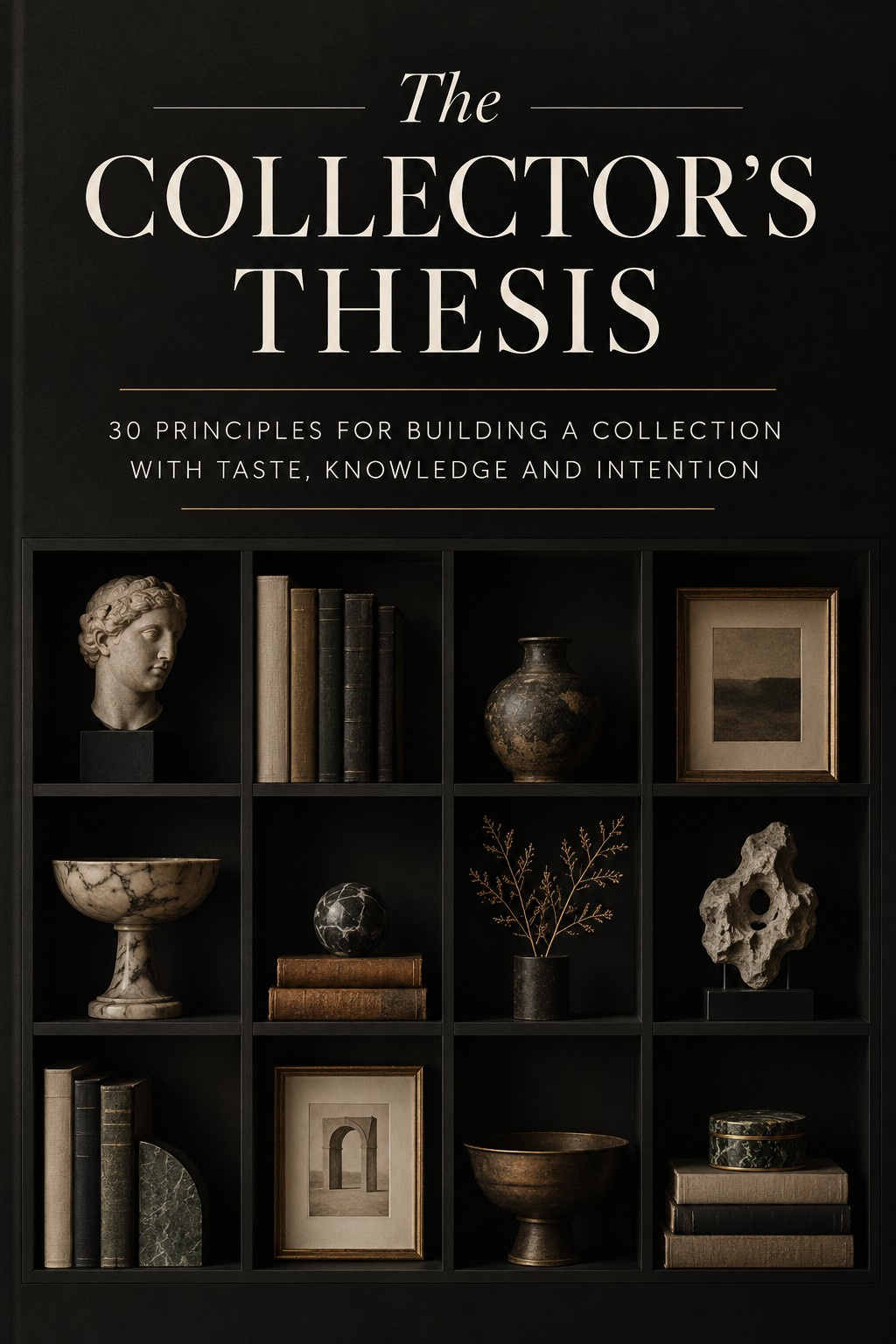
30 principles for building a collection with taste, knowledge and intention.
Learn how to recognise what belongs, what matters, what to walk away from — and what your collection is really saying.
240 pages · PDF + EPUB · secure checkout via Payhip · instant digital access
THE PROBLEM IS NOT ALWAYS BUYING BAD OBJECTS.
“Most collections do not lose direction because the collector buys bad objects. They lose direction because the collector keeps buying good ones.”
A beautiful watch. A rare record. A celebrated fragrance. A camera you have wanted for years. Each purchase can make sense on its own. The harder question is whether those objects make sense together.
THE CENTRAL IDEA
The Collector’s Thesis is not a price guide, a shopping list or an investment manual. It is a book about judgment: how to develop a point of view, understand value, resist noise and make more deliberate acquisitions.
Its thirty principles apply across categories because the objects change more than the underlying decisions do. Watches, records, books, cameras, cards, fragrances, furniture — the vocabulary changes. The questions travel surprisingly well.
SIX OF THE THIRTY PRINCIPLES
Give the collection an idea strong enough to guide what enters — and what does not.
The more you understand, the less easily urgency, status and noise make the decision for you.
Scarcity can matter. It is never the whole argument.
Market value and cultural, historical or personal significance are different questions.
Knowing when not to buy is part of knowing how to collect.
A collection becomes more meaningful when its logic can survive the collector.
INSIDE THE BOOK
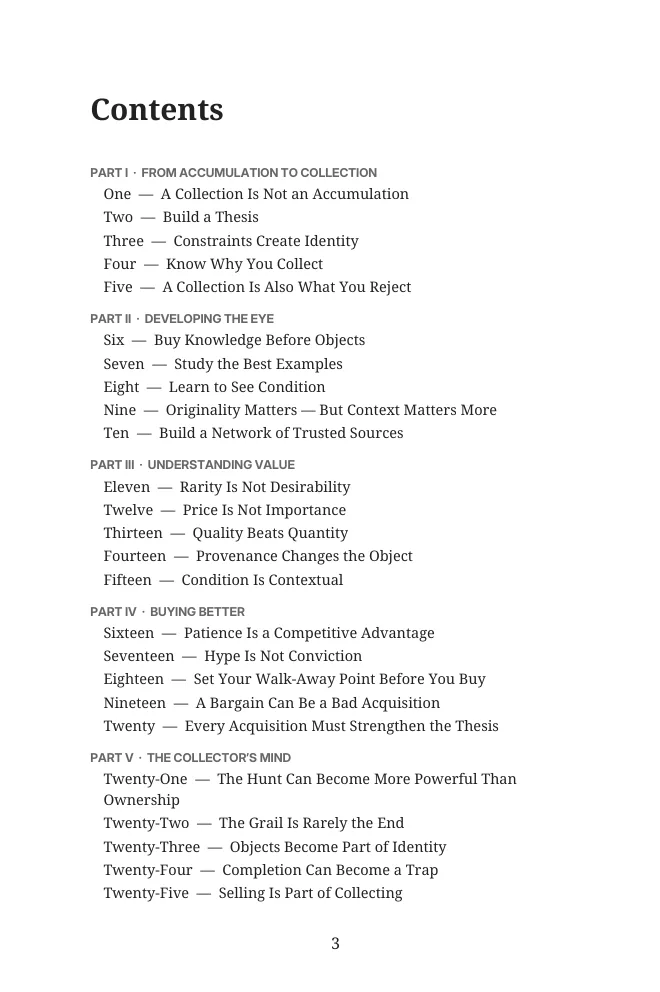
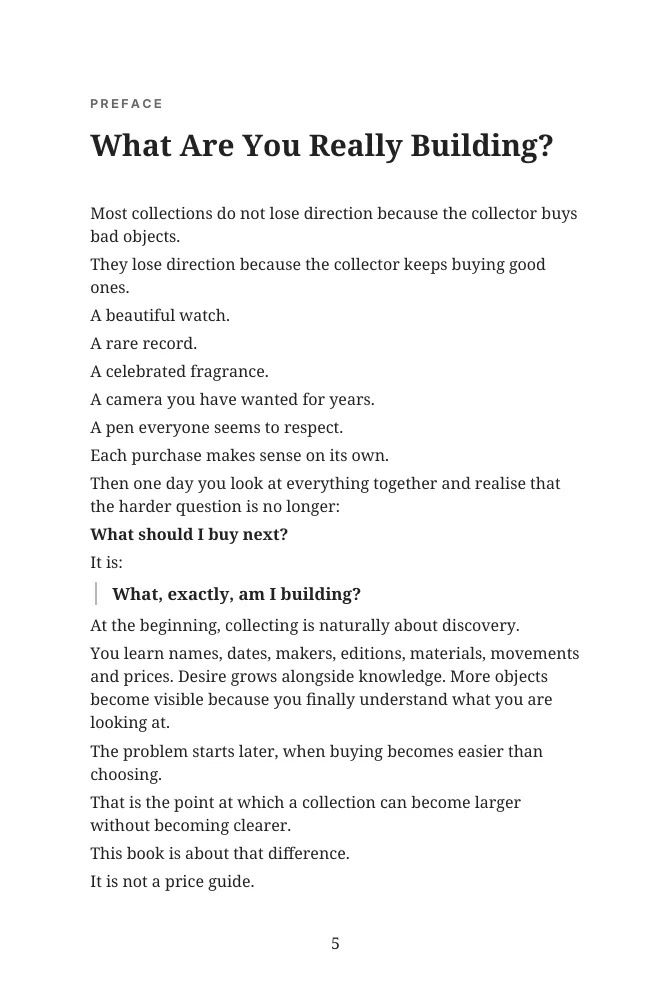
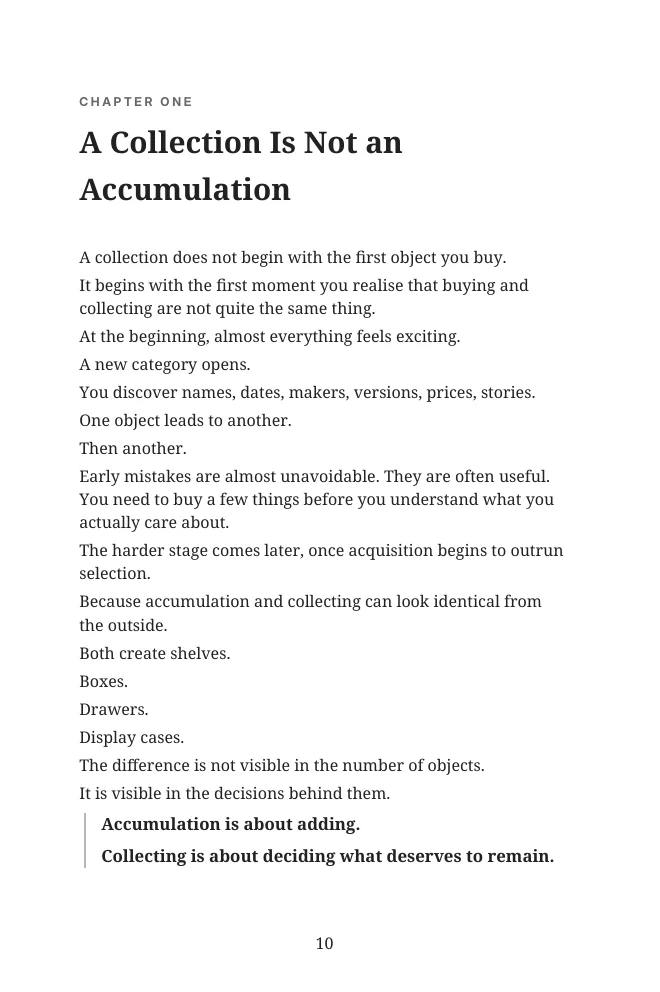
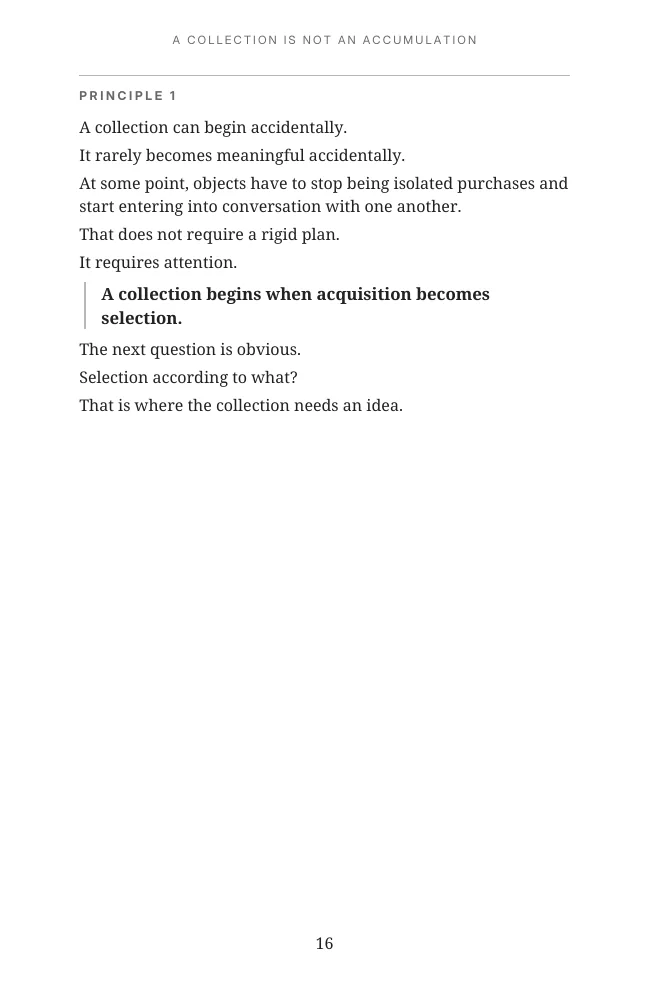
WHAT THE BOOK COVERS
THE DIGITAL EDITION
Read it as a complete argument or return to individual principles whenever a decision becomes difficult.
FIRST DIGITAL EDITION · 2026
QUESTIONS
No. Its examples move across watches, records, books, cameras, cards, fragrances, furniture and other categories. The focus is on the decisions beneath the objects.
No. It does not provide investment, appraisal or authentication advice. It is a framework for judgment, collecting knowledge and stewardship.
The complete digital edition in both PDF and EPUB formats, delivered after purchase through Payhip.
English (UK).
Yes. The free sample includes the cover, contents, preface, Chapter One and Principle 1.
THE COLLECTOR’S THESIS
30 principles for building a collection with taste, knowledge and intention.